Part 2 · August 26, 2026
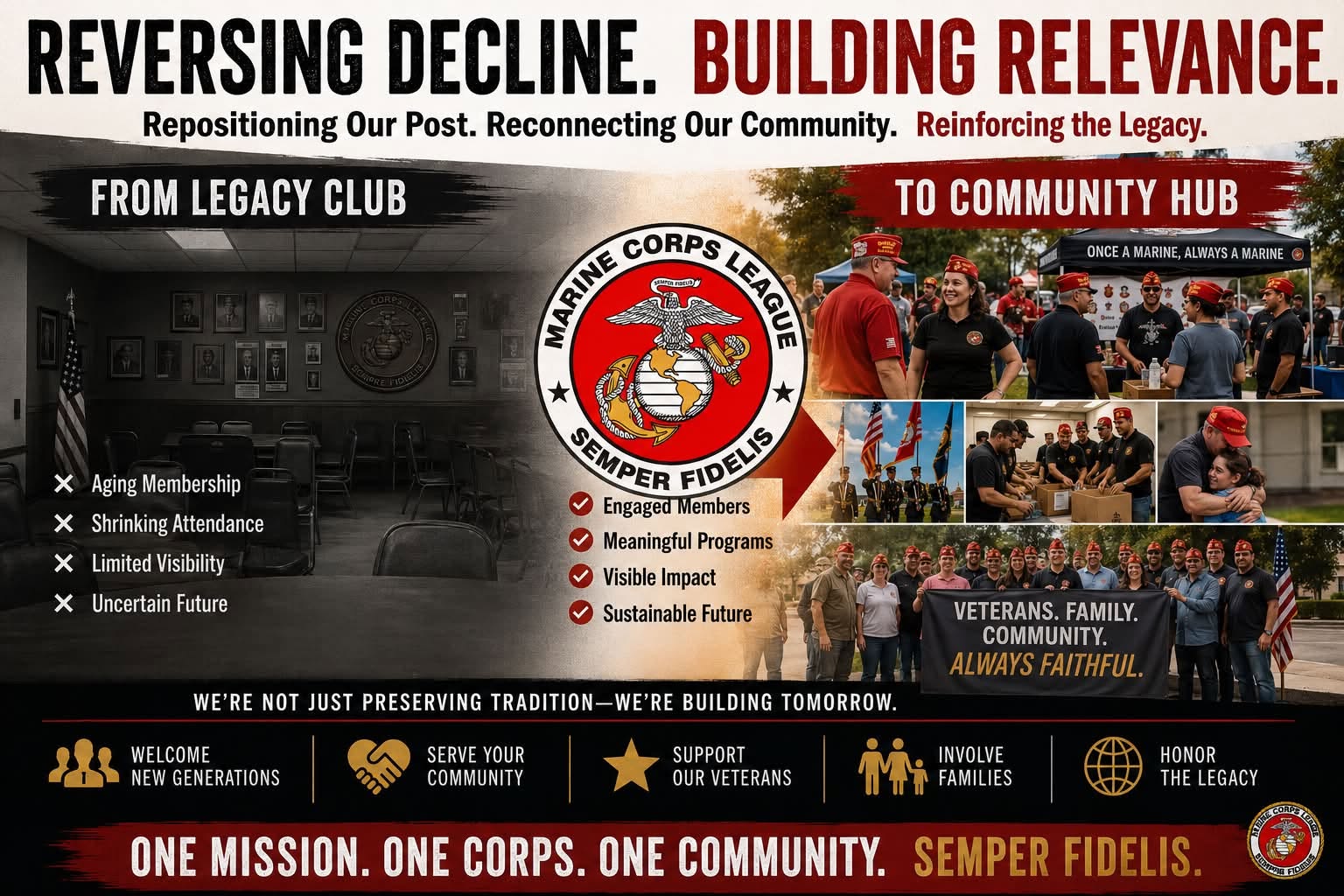
Reversing Decline, Building Relevance
Repositioning Our Post. Reconnecting Our Community.
From the author
Part 2 of a series on MCL #Recruitment and #Retention that also addresses #Detachmentprogramming and activities. May this info be helpful for @everyone!
(Disregard some graphics errors - computer generated has limitations.)
Reversing decline at a local post/detachment —in your area— doesn’t require a massive budget or national policy change. It requires repositioning the post/detachment from a “legacy club” into a relevant community hub for modern veterans and their families.
Here’s a practical, field-tested playbook you can actually implement.
1. Redefine the Mission: From “Meetings” → “Impact”
Most struggling posts organize around:
- Monthly meetings
- Maintaining the building
- Social/bar activity
That’s backwards for younger veterans.
What to do instead
Create 3–4 visible, repeatable missions, for example:
- Veteran career networking & job placement
- Community service (disaster response, local projects)
- Mental health & peer support
- Family-inclusive events
Take a cue from groups like Team Rubicon and The Mission Continues:
- Clear mission
- Visible action
- Immediate purpose
Tactical move:
- Replace one monthly meeting with a monthly service project
- Publicize outcomes (“15 veterans rebuilt a playground”)
2. Kill the “Walk-In Barrier” (First Impression Fix)
Right now, many posts unintentionally send this message:
“This is not for you.”
Common problems
- Dark bar atmosphere
- Cliques at the counter
- No clear welcome process
Fix it immediately
- Designate a greeter/host for every event
- Create a simple “first visit experience”:
- Welcome
- Quick tour
- Introductions
- Post signage: “All veterans welcome—ask us how to get involved”
Tactical move:
- Run a “New Veteran Night” once a month (no business meeting, just connection)
3. Modernize the Space (Without Huge Renovation)
You don’t need to rebuild—just rebalance.
Before vs After
- 80% bar → 40% bar, 60% flexible space
- Old memorabilia only → add modern relevance
Add:
- Coffee area / daytime workspace
- Wi-Fi + casual seating
- Kid-friendly corner (huge for retention)
- Clean, well-lit environment
4. Replace Meetings with Micro-Engagement
Younger vets won’t commit to:
- Monthly 2-hour meetings
- Robert’s Rules of Order
Replace with:
- 60-minute events
- Drop-in participation
- Task-based roles
Examples:
- “Saturday: 9–11am park cleanup”
- “Thursday: 6pm career networking”
- “Sunday: family BBQ”
Tactical move: Create a “no meetings required” membership tier focused on participation.
5. Build a Career & Networking Engine (Huge Draw)
This is one of the biggest missed opportunities.
What younger veterans want:
- Jobs
- Connections
- Mentorship
How to do it:
- Monthly veteran networking night
- Partner with local employers
- Create a private LinkedIn or Slack group
Tactical move:
- Recruit 5–10 local business leaders as “Veteran Employment Champions”
6. Go Where Veterans Already Are (Digital First)
If you’re not visible online, you don’t exist.
Minimum viable digital presence:
- Active Facebook group (still powerful locally)
- Instagram for storytelling
- Simple, updated website
- Text/email list (more important than you think)
Content that works:
- Photos of real activities
- Short veteran stories
- Clear “How to join” posts
Tactical move:
- Assign ONE younger member as digital lead
- Post 3x per week (consistency beats perfection)
7. Create Family-Inclusive Programming
A huge blind spot: most VSOs still operate like veterans don’t have families.
What works:
- Family BBQs
- Kids events
- Holiday activities
- Spouse-inclusive programming
Why it matters:
- Spouses often influence whether veterans stay involved
- Family-friendly = higher retention
8. Partner Instead of Compete
Traditional posts often ignore or compete with newer orgs—that’s a mistake.
Partner with:
- Wounded Warrior Project
- Local nonprofits
- Civic groups
- Colleges
Tactical move: Host joint events:
- Service days
- Wellness workshops
- Transition seminars
9. Empower Younger Leadership (or Nothing Changes)
This is the hardest—but most critical.
Reality:
If leadership stays the same, culture stays the same.
What to do:
- Create a “NextGen Committee” with real authority
- Give them:
- Budget
- Event control
- Decision-making power
Tactical move: Reserve 2 board seats for post-9/11 veterans.
10. Make Joining Frictionless
Current process:
- Forms
- Meetings
- Approval cycles
That kills momentum.
Fix:
- QR code → join instantly
- First-year discounted dues
- “Try before you join” events
What a Successful Post Looks Like (End State)
A thriving modern post:
- Has weekly activity, not monthly meetings
- Is busy during the day, not just at night
- Feels like a community hub, not a private club
- Includes families, not just veterans
- Provides clear value within the first visit
The Bottom Line
To reverse decline, a local post must shift from:
“A place veterans go”
to
“A platform that helps veterans live better lives right now.”
Got a detachment that made one of these work — or one where it fell flat? Say so. Comments are read before they go up.